Anycast IPs: Why the Same IP Can Be in Many Places
Anycast lets multiple servers share one IP address.
Key Takeaways
- Internet routing sends you to the “nearest” or best-performing anycast node.
- Anycast improves speed and resilience, but can confuse geolocation results.
- If an IP seems to “move,” it may be anycast behavior, not a security issue.
What Anycast Means (One IP, Many Locations)
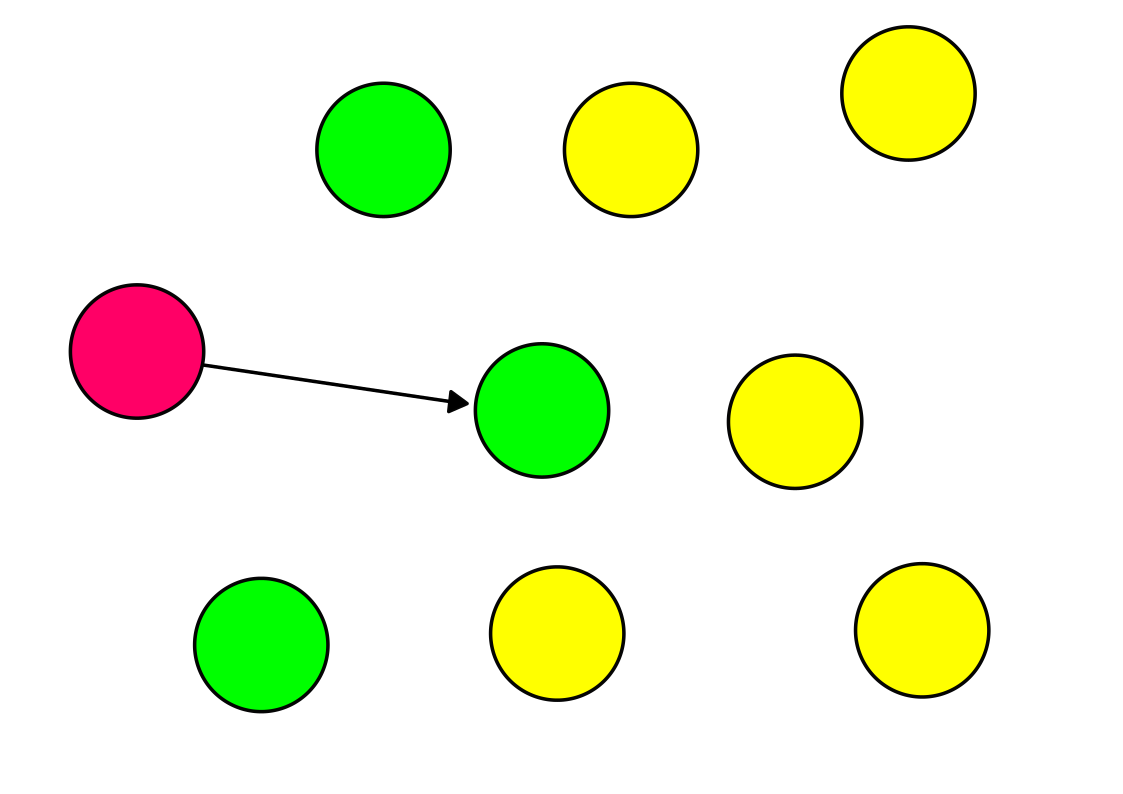
Normally (unicast), one IP points to one location/network path.
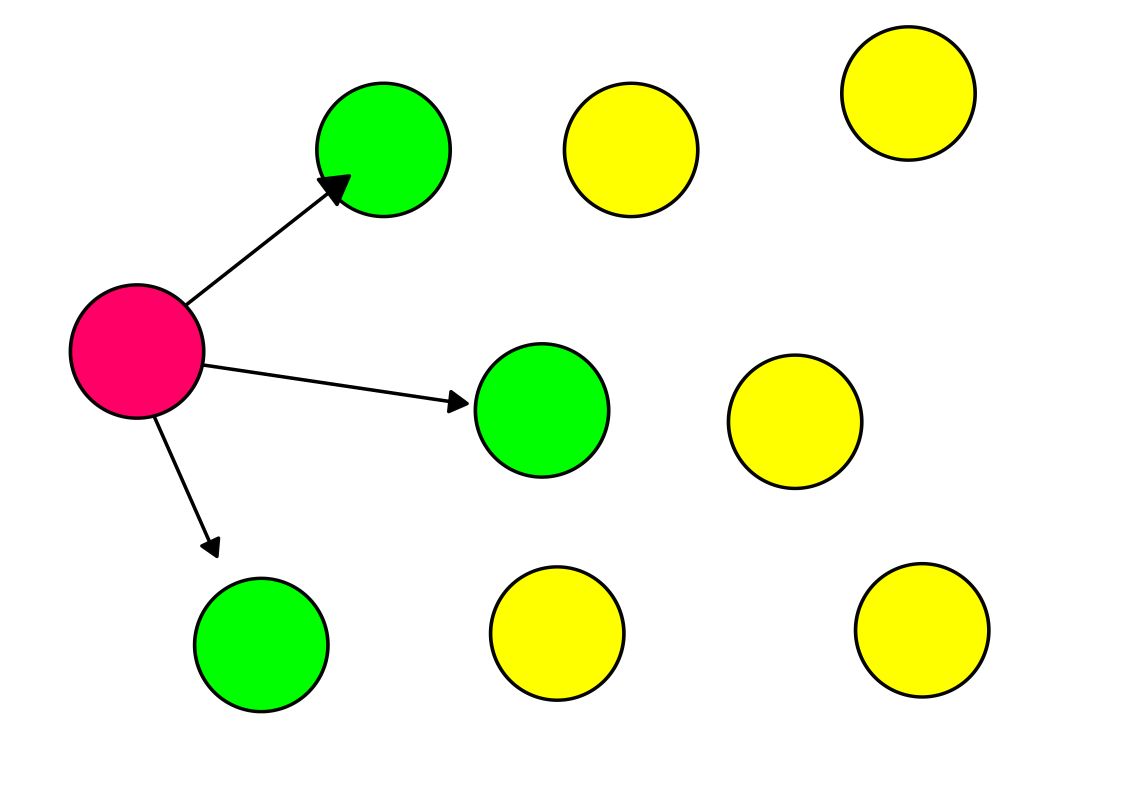
With anycast, multiple servers in different regions advertise the same IP prefix. Your traffic is routed to the most suitable node based on internet routing decisions.
How Routing Chooses a Node (Intuition Only)
The internet uses routing policies to pick a path. In anycast, that means: - You usually hit a nearby node - If a node is down, routing may shift you to a different node
You don’t need to know routing theory to use the concept: anycast IPs can legitimately serve different regions.
Anycast vs Unicast (Practical Differences)
Anycast - Same IP, multiple physical sites - Optimized for latency and resilience
Unicast - One IP, one destination - Easier to map IP to a single location
Why IP Location Tests Look “Wrong”
Geolocation databases try to map IPs to places. For anycast IPs: - The IP is the same everywhere - The served location changes by user network
So two users can run the same test and see different “locations” for the same IP.
Where You Commonly See Anycast
- Public DNS resolvers
- CDNs and edge networks
- DDoS mitigation providers
Anycast is a normal design choice for global services.
Troubleshooting: “This IP is in Two Countries”
If a service endpoint appears to “jump”: - Test from the same network repeatedly (it may stabilize) - Compare with another network (mobile vs Wi‑Fi) - Check if the organization/ASN remains consistent
If the org/ASN stays consistent, it’s often benign anycast behavior.
Practical Implications in Real Systems
Use IPVerdict to validate consistency: - Does the organization remain the same? - Does the ASN remain the same? - Does it look like global infrastructure (datacenter-like)?
This helps users avoid false alarms from location changes.
Common Misunderstandings
Q1: Does anycast mean an IP is “fake”? No. It’s a normal global infrastructure technique.
Q2: Why did my traceroute endpoint change? Anycast routing can shift you to another node.
Q3: Does anycast improve security? Indirectly. It can help absorb attacks and improve availability.
Q4: Can I force a specific anycast location? Not reliably. You’d need to change network path (sometimes VPNs change routing).
Q5: Is anycast the same as a CDN? Related but not identical. Many CDNs use anycast for parts of their network.

Limitations
- Anycast doesn’t guarantee the closest node in physical distance—routing is policy-based.
- Some services use a mix of anycast and unicast; behavior can vary by region.
Disclaimer
The information in this guide is provided for educational and diagnostic use. Network behavior can vary by environment, configuration, and data sources, so results should be treated as informative signals rather than definitive proof.
Conclusion
Understanding these fundamentals helps you interpret network signals more confidently and troubleshoot issues with fewer false assumptions.